9. Iditarod Trail Sled Dog Race – Burled Arch, Nome, Alaska, USA
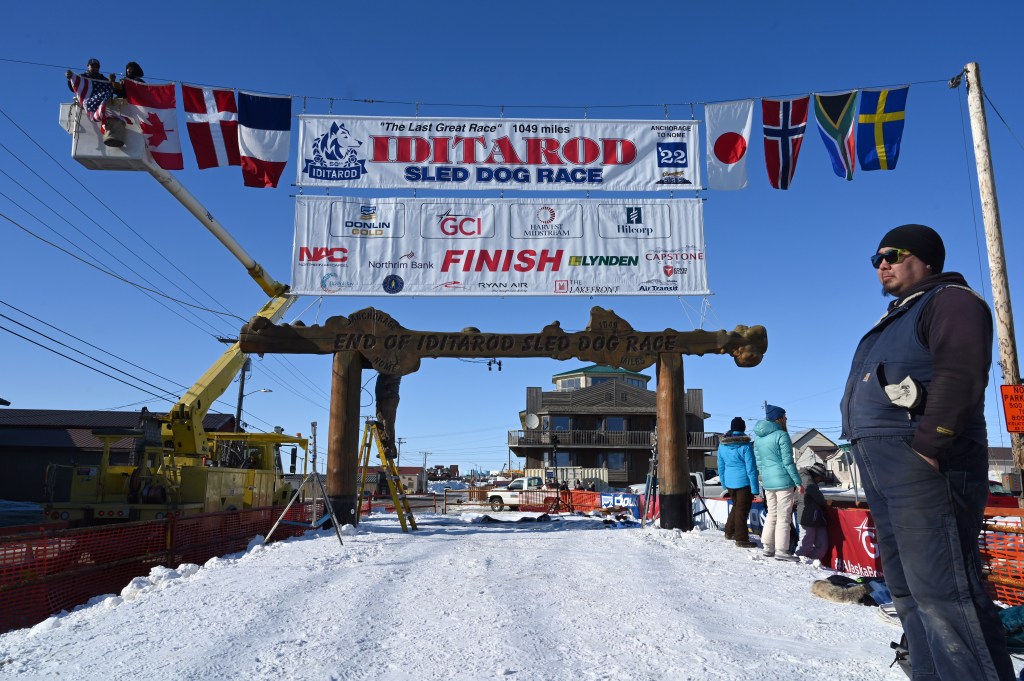
“The Last Great Race on Earth” ends under a rustic wooden arch in a remote gold-rush town on the Bering Sea. The Iditarod sled dog race spans roughly 1,000 miles across Alaska, from Anchorage to Nome, and when mushers and their dog teams arrive days later, they pass beneath the iconic Burled Arch on Nome’s Front Street. This arched gateway – hewn from a massive spruce log with gnarled burls – bears the engraved words “End of Iditarod Sled Dog Race.” By the time teams reach it, the whole town of Nome (plus visiting fans) has often been out in sub-zero temperatures for hours, waiting eagerly no matter if it’s day or 3 AM in darkness. As a team approaches, the city siren blares, alerting everyone that a musher is incoming. Under the glow of streetlights and often the aurora borealis above, the sled glides in and the crowd cheers wildly. The Burled Arch finish is steeped in lore: it was first erected in 1975 to give mushers a proper finish line, after the inaugural Iditarod had none . Today the arch is so symbolic that when it collapsed due to rot in 2024, it made headlines across Alaska . “It’s world-renowned in our sport — you talk about going under the Burled Arch…this is the goal,” says race director Mark Nordman . Indeed, every musher, whether the champion or the last-place Red Lantern, dreams of that moment of sliding under the Arch with dogs in harness, completing the epic journey. In that instant, frost-encrusted and exhausted, they join the ranks of Iditarod finishers – greeted by hearty handshakes, the waving Nome crowd, and often a sip of hot stew. The Burled Arch finish captures the rugged romance of Alaska and the profound bond between mushers and dogs, making it one of the most inspirational finish lines in any sport .
8. Hardrock 100 – Silverton, Colorado, USA
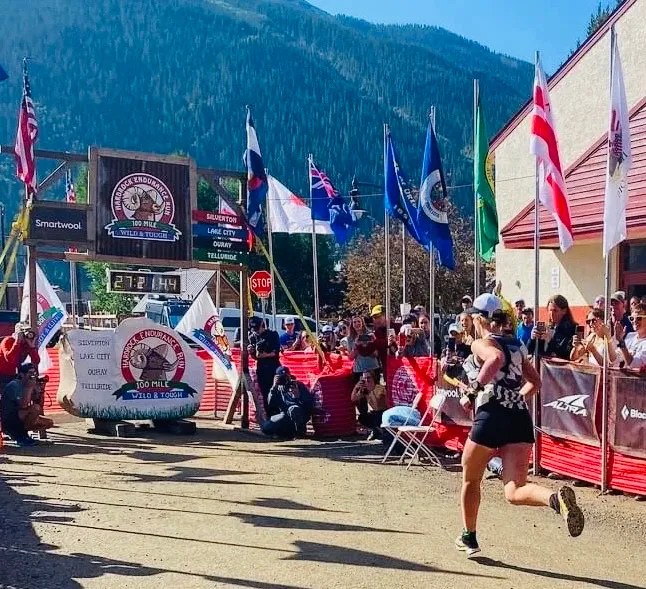
The finish of the Hardrock 100 ultra in the San Juan Mountains is delightfully quirky and deeply poignant. Here, there’s no banner to break, no inflatable arch – instead, finishers must kiss the Hardrock: a large, weathered stone emblazoned with a ram’s skull and the words “Wild and Tough.” After a 100.5-mile loop that includes 33,000+ feet of climbing through Colorado’s high alpine passes (often in lightning storms or snow), runners stagger back into the old mining town of Silverton. In front of the old gymnasium, the Hardrock stone sits waiting on a podium. When a runner approaches, the crowd (a mix of crew, locals, and fellow runners) erupts, cowbells echo off the surrounding peaks, and the race director announces their arrival. The tradition then is literal: the runner leans over and plants a kiss on the rock’s painted surface, marking their official finish . It’s a humble ritual that belies the difficulty of what they’ve just accomplished. Many drop to their knees to kiss the stone, sometimes bursting into tears of relief and joy. As Outside Magazine wrote, “Upon finishing the run, athletes kiss a painted hunk of rock…pulled from the San Juans and emblazoned with [a] mountain goat” – a simple act that has come to symbolize the spirit of Hardrock . Surrounding this scene is Silverton’s backdrop: a postcard-perfect little town at 9,300 feet, ringed by jagged 13,000-foot peaks. Often, soft morning light or starry midnight skies frame the moment, since finish times vary widely (the cutoff is a whopping 48 hours). There is no fanfare quite like Hardrock’s – it’s intimate, rooted in community, and steeped in tradition. For those rugged ultrarunners who endure Hardrock’s extremes, kissing “the Rock” is a victory sweeter than any medal.
7. Ultra-Trail du Mont-Blanc (UTMB) – Chamonix, France
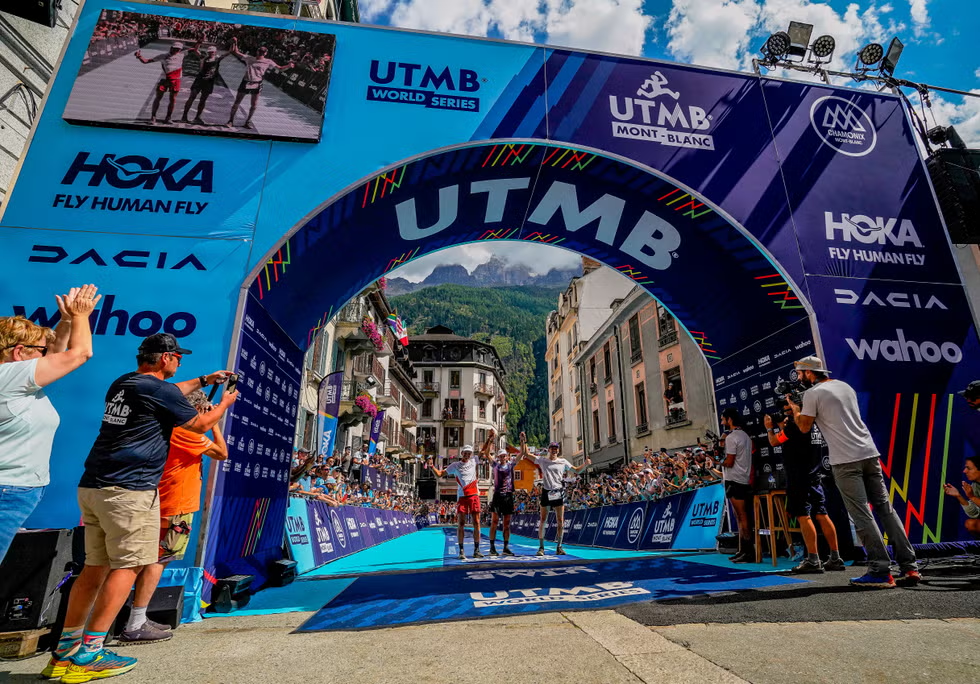
Chamonix lives and breathes trail running each August, when the Ultra-Trail du Mont-Blanc – a 171 km mountain ultra – comes home to this Alpine town. The UTMB finish line sits in the heart of Chamonix, ringed by historic churches and cozy chalets, with the snow-capped Mont Blanc massif towering behind. As runners round the final corner onto the cobbled downtown stretch, the atmosphere is nothing short of festive pandemonium. Crowds often 15–20 people deep press against barricades, clanging cowbells and chanting for every finisher – whether the race winner or the final finisher limping in after 40+ hours on the trail . “At the UTMB finish, fans were 15–20 deep in places to watch the men and women gut out the last mile…It’s something I’ll never forget,” wrote one spectator, comparing it favorably even against huge football crowds . Elites sprint in to flashbulbs and TV cameras (often breaking the tape in under 20 hours), but UTMB’s magic is that the support hardly wanes for those arriving through the night. Throughout the weekend, Chamonix’s streets remain lined with enthusiastic supporters, clapping and crying as exhausted runners trot, stumble, or sometimes collapse across the line. The finish arch reads “UTMB Mont-Blanc”, but it’s more than a race logo – it represents a journey through three countries, over mountain passes and through day and night. Each finisher is heralded as a hero. With Mont Blanc’s glaciers gleaming in the distance and the village church bells ringing, the UTMB finish line delivers an almost spiritual high. Little wonder it’s often dubbed trail running’s World Cup Final – the international flags, the charged emotion, and the epic backdrop make arriving in Chamonix an apex moment for any trail runner’s career.
6. Norseman Xtreme Triathlon – Gaustatoppen, Norway

The Norseman Xtreme Triathlon may be the world’s most brutal long-distance triathlon, and it boasts a suitably mind-blowing finish line: the summit of Gaustatoppen, a 1,883-meter Norwegian mountain. After swimming 3.8 km in an icy fjord and biking 180 km over mountain passes, athletes face a full marathon that ends with a punishing climb up rocky trails. Only the first 160 competitors are allowed onto the final ascent – those who make that cut earn the privilege of finishing atop the peak (and receive the coveted black finisher’s T-shirt, rather than a white one) . As racers scramble up the last boulders to Gaustatoppen’s windswept summit, they often describe a mix of exhaustion and euphoria. Support crew and mountain hikers form an impromptu cheering squad near the mountaintop lodge, ringing cowbells in the thin air. Upon reaching the summit finish line – often in frigid wind or even snow – athletes are greeted with a 360° panorama that defies belief. “Weather permitting, you can enjoy a spectacular view of as much as one-sixth of Norway’s mainland from the top,” notes VisitNorway . Standing literally “on top of Norway,” finishers feel on top of the world. The Norseman finish has a unique awards ceremony in lieu of medals: those who conquer the summit are handed a black T-shirt emblazoned with “Norseman Finisher”, a trophy earned by fewer than 300 people each year . As one Norseman veteran put it, “Regardless of finishing position, going home with either finisher’s shirt is seen as a badge of honor.” The combination of extreme challenge and the majestic summit backdrop makes Gaustatoppen a finish line like no other – literally capping the race with the view of a lifetime.
5. IRONMAN World Championship – Aliʻi Drive, Kona, Hawaiʻi, USA
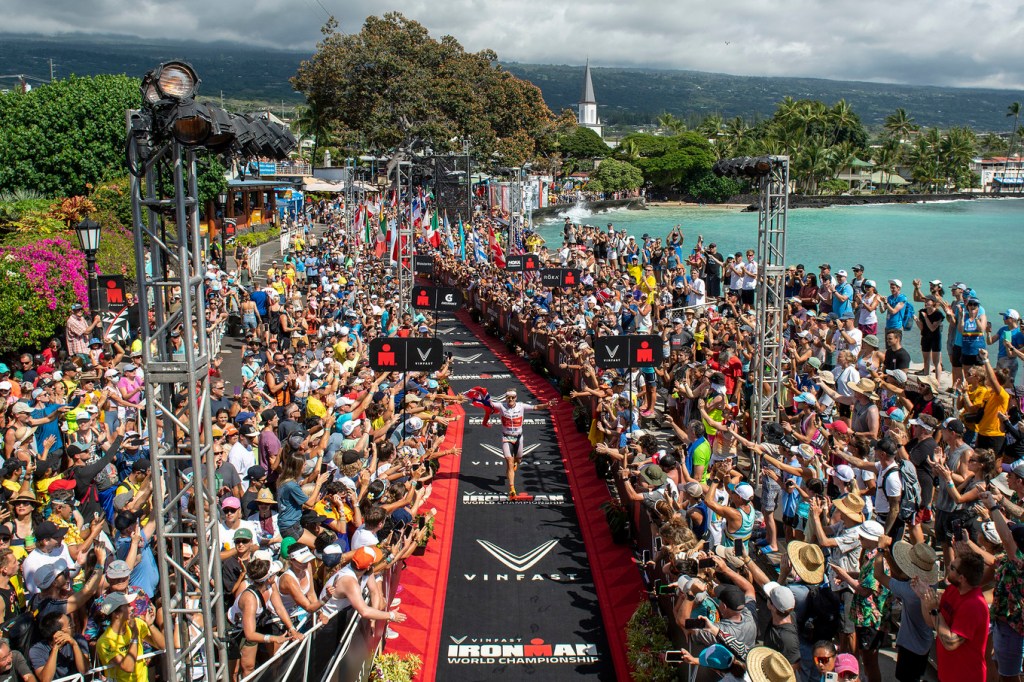
Triathletes around the globe dream of running down Aliʻi Drive in Kona, Hawaiʻi, toward the illuminated arch of the IRONMAN World Championship finish line. After a 140.6-mile journey of swimming in Kailua Bay, biking across scorching lava fields, and running a marathon in the Hawaiian humidity, athletes make a final turn onto Aliʻi Drive’s waterfront. The scene is electric: music blares, tiki torches flicker, and a roaring crowd lines the street day and night. Each finisher hears the magic words announced over the loudspeakers: “You are an IRONMAN!” For many, that moment unleashes overwhelming emotion. It’s common to see tears, collapse, or exuberant celebrations – even cartwheels or the famous “Blazeman roll” across the line, as inspired by one legendary finisher . The Kona finish has been called “the greatest spectacle in sports” by participants . Spectators often stay until midnight to witness the final finishers before the 17-hour cutoff, embodying the race’s mantra that “anything is possible.” As one report put it, “the finish line at Kona is a moving mix of emotions…shared between athletes and the crowd” . The scene is set by the Pacific Ocean on one side and cheering fans on the other, with the Big Island’s palm trees swaying. Every October, this historic Kona finish line becomes the stage where ordinary people achieve the extraordinary – making Aliʻi Drive a place of pilgrimage in the triathlon world.
4. Great Wall Marathon – Huangyaguan, Great Wall of China
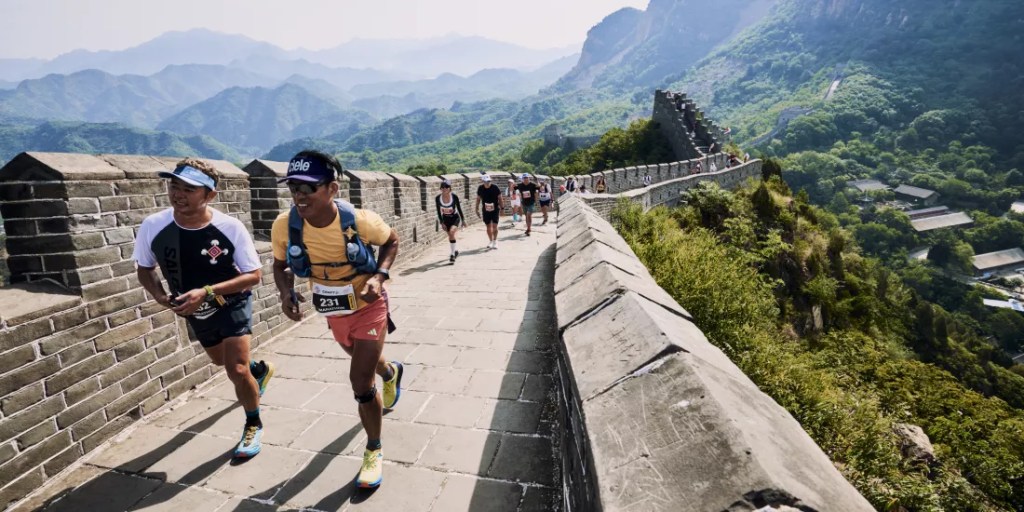
Few finish lines can rival the Great Wall Marathon for sheer spectacle. This bucket-list race takes place on one of humanity’s greatest architectural marvels – China’s Great Wall – and its finish line sits atop ancient stone ramparts with sweeping mountain vistas. After conquering some 5,164 historic stone steps under the hot May sun, runners arrive at the end of their odyssey amid watchtowers and rolling hills of the Huangyaguan Great Wall. The journey to get here is punishing: steep, uneven staircases that burn the legs, and sections of wall winding like a dragon’s back across ridges. But “the challenge is well worth it as you will experience breathtaking panoramic views of the Great Wall,” organizers promise, “then crossing the finish line will be one of your greatest accomplishments!” . Indeed, fatigued racers often drop to their knees or raise their arms in triumph upon finishing, surrounded by centuries-old stonework. The backdrop is surreal – crenelated walls snaking off into distant green mountains, a view that makes all the suffering worthwhile. Many participants describe this finish as both humbling and exalted: standing on the Great Wall at the end, they feel connected to history and to an incredible feat of endurance. The Great Wall Marathon finish line isn’t just a physical endpoint; it’s a place where personal victory meets world heritage. As a reward, every finisher earns not just a medal but a lifetime of bragging rights for having conquered the Wall.
3. Spartathlon – Statue of Leonidas, Sparta, Greece
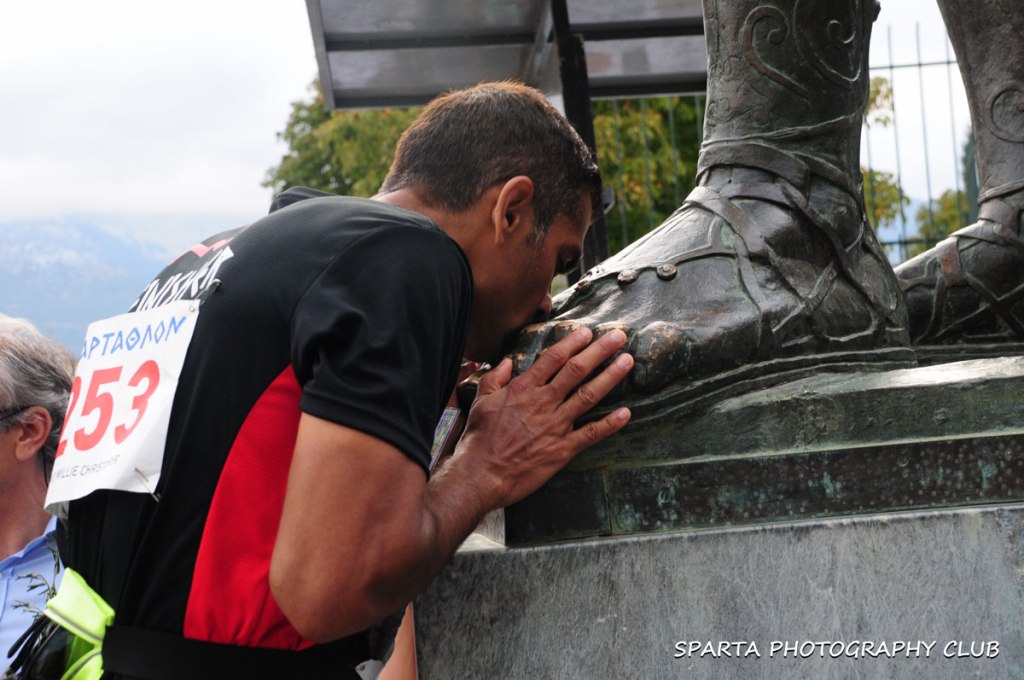
If Athens is historic, the Spartathlon is downright mythic. This 246 km (153 mile) ultramarathon retraces the route run by Pheidippides in 490 BC, from Athens to Sparta – and there is no ordinary finish chute awaiting the few hardy finishers. Instead, runners must touch the feet of the bronze Statue of King Leonidas to stop the clock, literally finishing at the foot of a king. Emotions run high in those final steps up Sparta’s main street toward Leonidas’s imposing statue. Many athletes break into tears as they reach out and lay a hand on Leonidas’s foot – a gesture symbolizing not only the end of their herculean journey but also a tribute to history. Veteran Spartathletes describe it as “the greatest finish to the greatest race. A mixture of intense emotions that never get – and will never get – old.” . By day or night, whether under Greece’s scorching sun or amid a howling storm, finishing Spartathlon carries profound weight . Each finisher is draped in a Greek flag, given a sip of sacred water, and often collapses in joy and exhaustion against the statue’s base. The ritual of kissing or touching Leonidas’s feet gives this finish a reverence unlike any other. It’s the ultimate fusion of sport and legend – as one journalist noted, “when they touch his feet, they break down,” because reaching this finish is the culmination of an odyssey . Small wonder Spartathlon’s finish line is often called sacred by the ultrarunning community.
2. Athens Marathon – Panathenaic Stadium, Athens, Greece
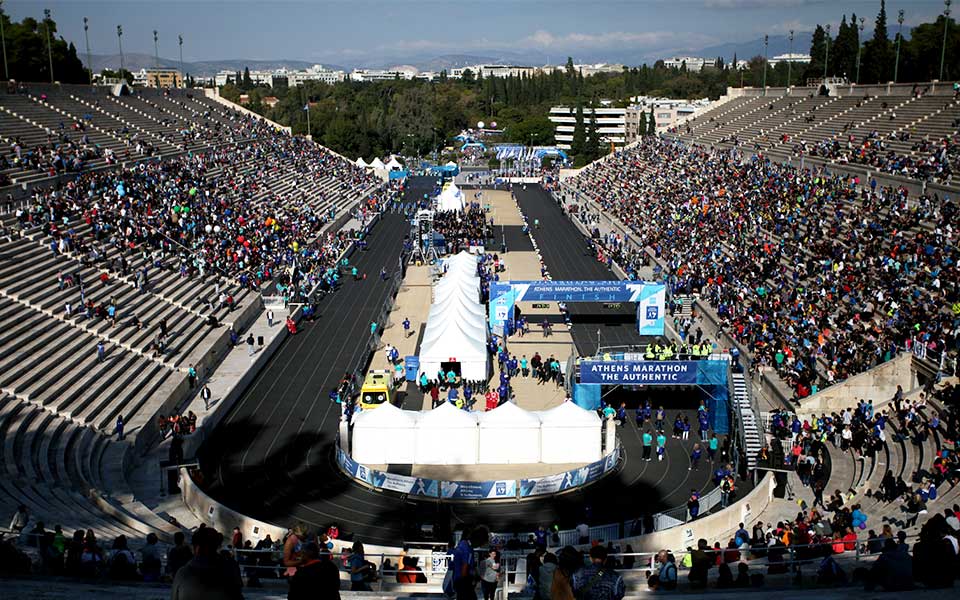
Finishing the Athens Marathon (The Authentic) is like time travel: athletes trace the footsteps of the original marathoner, from the town of Marathon to Athens, and enter the Panathenaic Stadium – a magnificent white-marble arena built in 329 BC. Runners crest the final stretch and spill into this ancient Olympic stadium to a roar of applause. “Crossing the finish line here is a moment of triumph, as runners complete their journey in the footsteps of ancient legends,” one guide describes . Indeed, the experience is goosebump-inducing: the marble stands (host to the first modern Olympics in 1896) erupt with cheering crowds as each finisher savors a victorious lap. The stadium’s grandeur and history make for an unforgettable finish – many runners are overwhelmed at the sight of the same arena where ancient athletes competed millennia ago. As the sun beats down on the marble and the Greek flags flutter, each finisher can feel the weight of history and the marathon’s heroic origins. It’s no wonder the Athens finish line is often called “hallowed ground”. In the very birthplace of the marathon, to finish is to become part of a legend – completing “their journey in the footsteps of ancient legends” and adding a personal triumph to the annals of this historic course .
1. Tour de France – Champs‑Élysées, Paris, France
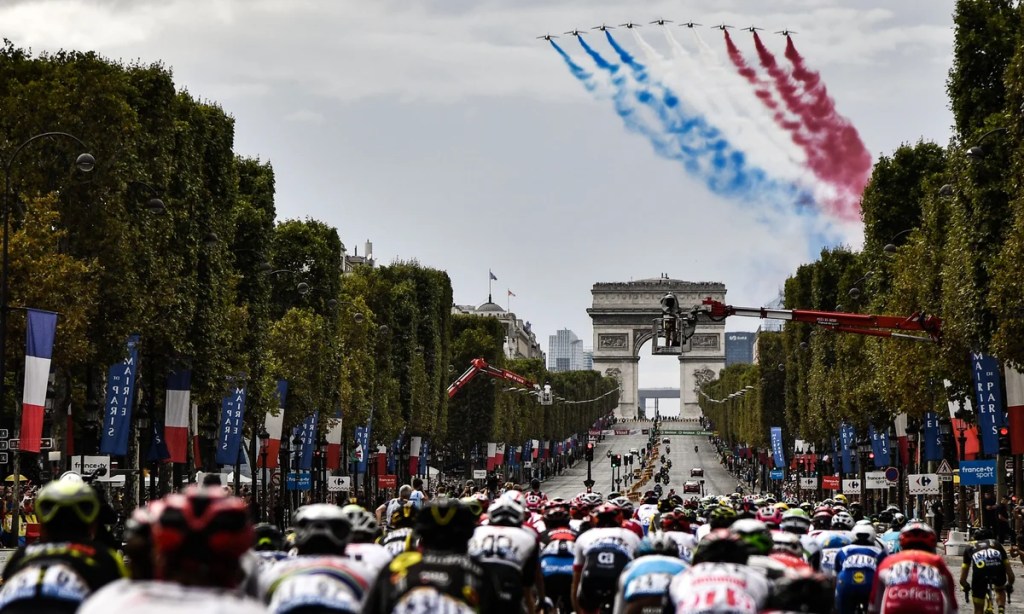
The final stage of the Tour de France culminates on Paris’s Champs‑Élysées, a legendary finish framed by the Arc de Triomphe and throngs of cheering spectators . Since 1975 (aside from a 2024 detour), this grand avenue has been the traditional finish for cycling’s most prestigious race . Riders sweep past Parisian cafés and plane trees in a triumphant procession before launching into an all-out sprint on cobblestones toward the line. “From that moment on, that image — the yellow jersey racing towards the finish line, surrounded by fans and history — became a symbol of the Tour itself,” one account notes, underscoring how iconic this scene has become . Indeed, it’s impossible to imagine the Tour without this “final dash up the great avenue” amid Paris’s monuments and majesty. Year after year, the Champs‑Élysées finish delivers drama, from Mark Cavendish’s streak of victories to Greg LeMond’s eight-second triumph in 1989 . Winning here or even completing the Tour under the Arc’s proud gaze is considered the ultimate glory in professional cycling, a spectacle etched into sports folklore .
Sources: The Guardian; Santini Cycling (Tour de France finish); Travelling Fit (Athens Marathon); Aykut Celikbaş – Spartathlon race report; RunGreatWall.com (Great Wall Marathon); Ironman.com and Triathlete Magazine (Kona Ironman); Slowtwitch & Suunto (Norseman Xtri); WeeViews and Adharanand Finn in The Guardian (UTMB); Outside Magazine (Hardrock 100); Alaska’s News Source & Iditarod.com (Iditarod finish).
 blog.zone4