If you’ve ever stood trackside at a cyclocross race, you know the scene: mud flying, cowbells ringing, riders sprinting up a hill with bikes slung over their shoulders. It’s part road race, part trail scramble, and part obstacle course – and it makes you wonder: who came up with this idea, and why did it stick?
To understand why cyclocross is both demanding and cherished, we need to explore its origin story – from early 20th-century steeplechases and military exercises to the evolution of its rules, races, and heroes.
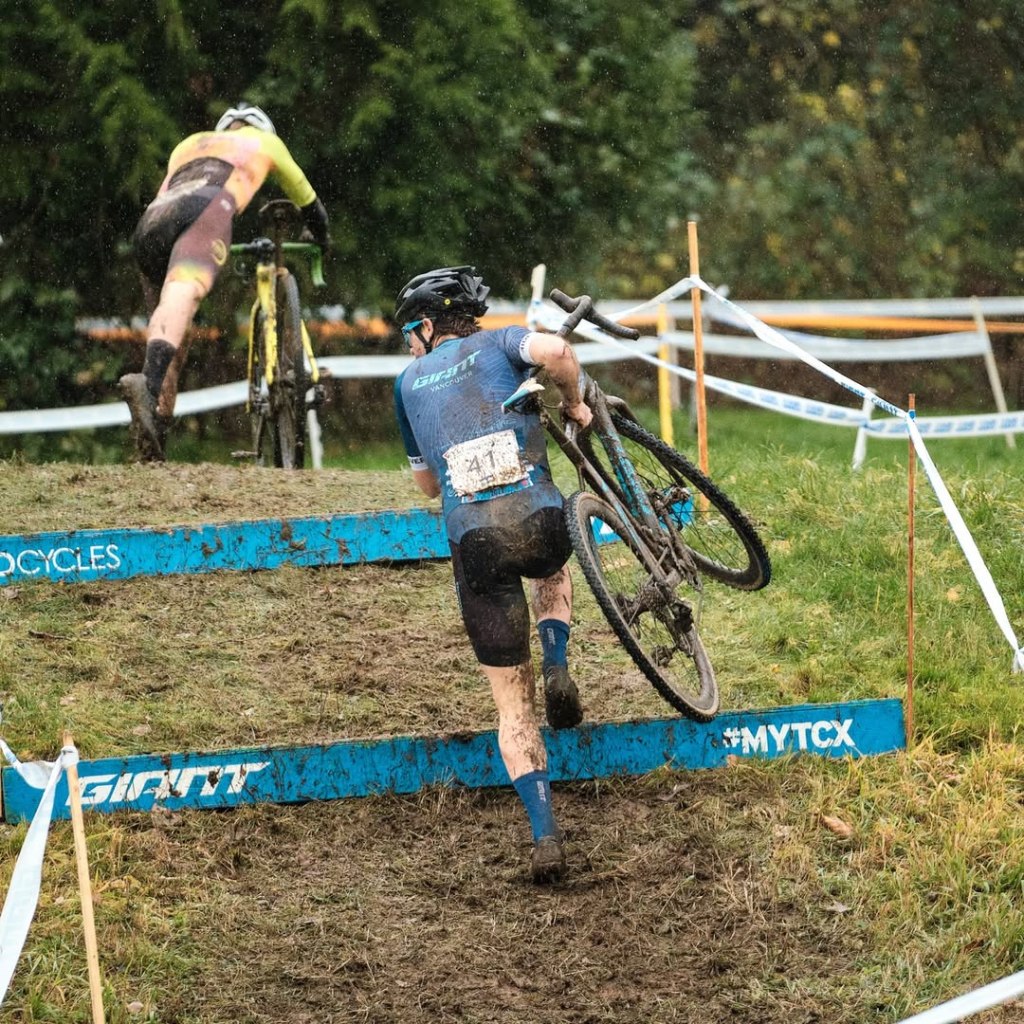
Steeplechases and Soldiers
Cyclocross traces its roots back to early 1900s Europe, when road cyclists kept fitness through winter by taking “shortcuts” across farm fields, fences, and ditches. These chaotic dashes were nicknamed steeplechases because riders would aim for a church steeple in the distance and make a beeline across country.
The story goes that Daniel Gousseau, a French army private and avid cyclist, saw military training potential in this style of racing. In 1902, he organized France’s first cyclocross championship, pitching it as both fitness training and a test of bike handling. That mix of military grit and playful improvisation became the DNA of cyclocross.
Early Races and Spreading Popularity
What started as winter training quickly became a sport of its own. By the 1910s, national championships were happening in France, Belgium, and Switzerland. Road racers caught on too: Octave Lapize credited his 1910 Tour de France win to winter cyclocross training.
Fans loved the mud, the unpredictability, and the chance to see riders up close. By the 1920s, crowds in France were packing into parks to watch these “mud races.” Other countries followed suit, and the format shifted from point-to-point romps to looping circuits with designated obstacles.
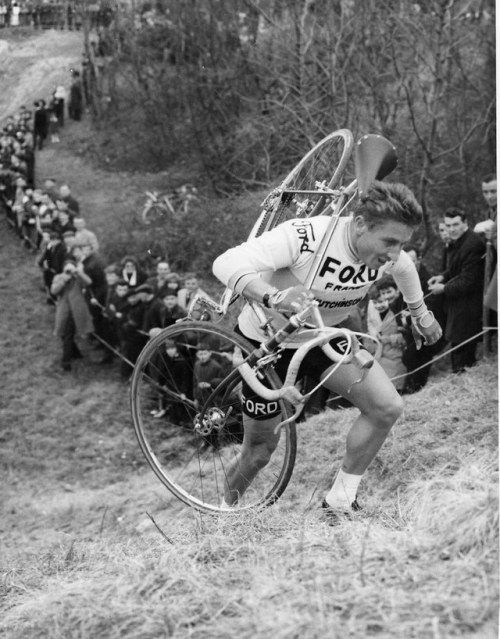
Throughout the 1920s and 1930s, cyclocross gained a loyal fanbase. Spectators would gather on cold weekends to watch riders grind through mud and vault over barriers. In fact, France saw huge crowds attending cyclocross events between the world wars. The first international cyclocross race, ambitiously titled Le Critérium International de Cross-Country Cyclo-Pédestre, took place in Paris in 1924. This effectively served as an unofficial world championship, proving that the appeal of “mud races” extended beyond any one country’s borders. By this time, races had become more structured, often run on marked courses (frequently looping circuits) rather than pure point-to-point dashes, but they retained the core challenge of mixed terrain and required dismounts. Elite road cyclists like Eugène Christophe and others dabbled in cyclocross, helping to refine techniques (Christophe was among the pioneers of carrying the bike on the shoulder to clear obstacles smoothly ). The sport’s popularity was on the rise, even if its governance was still catching up.
From Niche Sport to World Championships: Getting into the mud
Despite cyclocross’s growing popularity, cycling’s authorities were initially slow to formalize it. The Union Cycliste Internationale (UCI), cycling’s world governing body, did not recognize cyclocross officially until the late 1940s . But once they did, cyclocross quickly stepped onto the world stage. In 1950, Paris hosted the inaugural UCI Cyclocross World Championship, finally giving this rugged discipline a global title event. Fittingly, the first world champion was a Frenchman: Jean Robic, a Tour de France winner from Brittany who proved his mettle off-road as well. In fact, France dominated the early world championships – French riders won the first several editions of the Worlds throughout the 1950s, with stars like Roger Rondeaux and André Dufraisse each claiming multiple titles and thrilling home crowds.
Before long, however, the balance of power shifted north. In the 1960s, Belgium and the Netherlands – countries with muddy fields and fervent cycling cultures – embraced cyclocross at an elite level. Perhaps the greatest cyclocross athlete of all time emerged in this era: Eric De Vlaeminck of Belgium, who would claim the world championship seven times , a record unmatched by any other man. His string of titles between 1966 and 1973 (a period when cyclocross’s popularity in Belgium exploded) helped cement the sport as a national passion. Eric’s own brother, Roger De Vlaeminck, became a legendary road cyclist, illustrating how cyclocross had become both a proving ground and a discipline respected in its own right. Other countries also produced icons – for example, Italy’s Renato Longo won five world championships in the 1950s–60s – but Belgium’s love affair with “veldrijden” (field racing) truly took cyclocross to new heights. By the 1970s, top cyclocross events in Flanders drew thousands of spectators, and the sport had spread beyond Europe’s borders, with the first U.S. National Championship held in 1963 and growing American participation thereafter .
Cyclocross’s golden era heroes exemplified its grit and appeal. Above: Belgian champion Eric De Vlaeminck in action at the 1971 World Championships, on his way to one of his record seven titles. His dominance, along with the success of other Belgian and Dutch stars, made cyclocross a winter fixture on the cycling calendar. By now, the sport was fully professionalized – no longer just off-season training for road racers, but a distinct discipline with its own circuits, specialist athletes, and devoted fanbases.
What Makes Cyclocross Unique?
Unlike road or mountain bike races, cyclocross is about variety and intensity. A typical course might include grass, pavement, sand, mud, and stairs, all packed into a 2-3 km loop. Races are short (40 – 60 minutes) but full throttle. Riders are constantly mounting, dismounting, and battling terrain that changes every lap.
The gear evolved too: bikes that look like road frames but with knobby tires, more clearance for mud, and disc brakes. Riders even swap bikes mid-race in pit zones to keep things rolling. It’s a test of skill, power, and grit, one reason why so many road and MTB champions (from Eddy Merckx to today’s Wout van Aert and Mathieu van der Poel) cut their teeth in cyclocross.
The equipment has evolved to meet these challenges: cyclocross bikes resemble road bikes but with important tweaks – knobby tires for grip, stronger frames, high clearance to shed mud, and often disc brakes for reliable stopping power . Uniquely, racers can switch bikes in designated pit zones during a race, allowing a caked-with-mud bike to be cleaned by a pit crew while the rider continues on a fresh mount . This keeps the race rolling despite the punishing conditions that would overwhelm normal equipment. All these elements make cyclocross a supreme test of a cyclist’s versatility: it demands cardio endurance, explosive power, nimble handling, and even the ability to jump off and on the bike gracefully at speed. Little wonder that many champions in other cycling disciplines (from road legend Eddy Merckx to modern mountain bikers) have tried their hand at cyclocross to hone their skills.
A Beloved Winter Spectacle
Beyond the physical demands, cyclocross has earned a special place in cycling culture because it’s just so fun – in a distinctly muddy, masochistic way. The sport’s early decades already showed hints of this, with curious onlookers in 1900s Paris exclaiming “Quel sport boueux!” (“What a muddy sport!”) as riders veered off roads into fields. That muddy spectacle remains a huge draw. In Belgium especially. A Belgian cyclocross race is equal parts athletic event and hearty outdoor party – as one observer noted, fans will cheer (and revel) “hanging out all day in a wet park or an old quarry with only beer and chips to warm you up”. The camaraderie between racers and spectators is closer than in other cycling events; courses twist repeatedly through a venue, so fans see the riders pass multiple times and can get right up to the tape, shouting encouragement (or good-natured heckles) as mud flies. It’s a sport where cowbells and costumes are welcome, and where even the superstars often finish caked head-to-toe in dirt, indistinguishable from the local amateurs.
Crucially, cyclocross has remained a beloved discipline because it bridges generations and disciplines. It was born as a way for road racers to stay fit in winter; Wout van Aert and Mathieu van der Poel first made their names as rivals in the mud of cyclocross before winning classics and Tour de France stages on the road.
At its heart, cyclocross is as much community as competition. The mud, the barriers, and the shoulder-slung bikes are iconic, but so is the atmosphere. Fans line the tape with cowbells, kids chase their heroes through the park, and everyone – pros and amateurs alike – ends the day covered in dirt and smiling.
Did this inspire you? Register for a cyclocross race @ zone4.ca – one of our favourites is the Twisted Turtle Series.
Sources:
- Wikipedia: Cyclo-cross
- VeloNews (Outside): Cyclocross: What is it, where did it come from?
- Bike Hugger Magazine: The First Cyclocross Race (Byron, 2014)
- Biloxi Bicycle Works: A Brief History of Cyclocross Racing
- Clea-Bicycle Blog: History of cyclocross (Eric De Vlaeminck’s 7 titles)
- Pellicle Magazine: Beer and Cyclocross in Belgium (on fan culture)
 blog.zone4