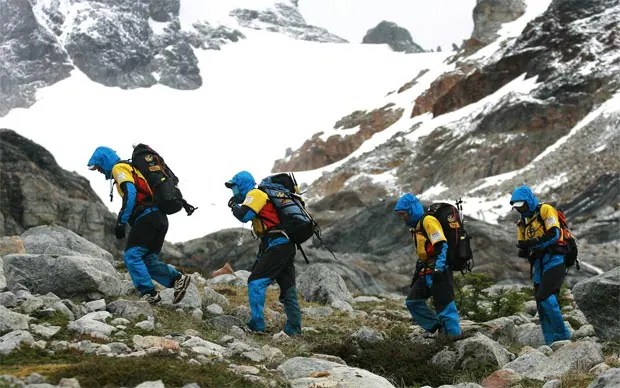
Imagine this: it’s 3:00 a.m., you’re somewhere in a misty mountain forest, your only light a bobbing headlamp. Your legs are caked in mud, you haven’t slept in 30 hours, and one of your teammates swears he just saw a talking rat in a top hat.
This isn’t a dream – it’s adventure racing. From Fiji’s jungles to Patagonia’s wilds, racers kayak, bike, trek, and navigate through unmarked wilderness courses lasting from a day to over a week. It’s been called “eight days of pure hell in a beautiful setting.” Yet, people keep coming back for more because on the other side of pain and sleep deprivation lies euphoria and accomplishment.
Think of the 66 teams who tackled a 671 km course at Eco-Challenge Fiji, or athletes who run, cycle, and kayak across New Zealand’s 243 km Coast to Coast. Closer to home, over 1,000 racers descend on British Columbia for the Mind Over Mountain Adventure Race (MOMAR), packing paddling, biking, running, and orienteering into one epic day.
The lure is universal: it’s the ultimate test of mind, body, and teamwork.
So how do you not only survive but succeed?
Step 1: Commit to the Adventure
Success begins with commitment. Signing up is more than clicking a button; it’s agreeing to weeks of preparation, gear sorting, and training. That leap is intimidating – and that’s the point.
Mark “Mace” Macy, a 69-year-old adventure racing legend, proved it in 2019 when he entered Eco-Challenge Fiji despite an Alzheimer’s diagnosis. His team didn’t finish, but showing up was victory enough.
Commit boldly. Once you register and mark the date on your calendar, you’re no longer a spectator – you’re in training. Everything else flows from that decision.
Step 2: Train for Every Terrain

Unlike a marathon or triathlon, adventure racing demands versatility. You might paddle, climb, bushwhack, bike technical trails, and trek off-trail, all in one event.
Start with a strong aerobic base: long runs, rides, and paddles (adapt to your race). Add strength training to handle gear and obstacles. Practice each sport, especially your weak spots. Road cyclists need trail time; non-paddlers need river hours. Trekking practice matters too – you’ll often be on your feet for hours with a pack.
Simulate race fatigue with back-to-back sessions, like a bike ride followed by a long run. Try “mini adventure” weekends mixing paddling, biking, running, and navigation. The winners at Coast to Coast (New Zealand), for example, are rarely the fastest in one sport but solid across all.
The goal isn’t to be elite in one thing but competent in everything. Train your weaknesses until nothing on race day surprises you.
Step 3: Assemble Your Dream Team
In multi-day expedition races, most teams are co-ed groups of four. Even shorter races like MOMAR are team events. Success depends as much on dynamics as fitness.
Choose teammates with complementary skills: a strong navigator, a bike powerhouse, a paddler, and a steady endurance runner. Attitude matters most – positivity and patience beat raw speed when exhaustion sets in.
Practice together beforehand. Learn each other’s quirks. Assign flexible roles: navigator, motivator, “pack mule,” or gear fixer. Be ready to tow a fading teammate or share extra food at 2 a.m.
The Patagonian Expedition Race is full of such stories. One year, a teammate fell asleep on his feet while trekking. His team literally guided him while he “sleepwalked” until the checkpoint. That’s adventure racing at its core: no one finishes alone.
Step 4: Master Navigation
Strong legs won’t save you if you can’t find the checkpoints. Courses are unmarked; you rely on maps and compass. GPS is often forbidden. At MOMAR, racers only see the route on race morning.
Learn to read contour lines, use a compass, and make route choices. Sometimes the longer trail around a mountain is faster than a straight line over it. Practice night navigation – everything looks different in a headlamp’s glow.
Race directors love surprises: checkpoints hidden in odd places, fog rolling in, maps with quirks. Stay calm and methodical. Great navigation often beats raw speed. It’s not uncommon for a physically stronger team to blow a big lead because they made a navigational blunder. Conversely, a savvy navigational call can leapfrog you ahead of rivals. For example, in a Patagonian Expedition Race, Team GearJunkie/YogaSlackers took an unconventional route choice – bushwhacking straight over an unmapped mountain range – to avoid a longer official trail. It was a gamble, but it paid off: they pioneered a new shortcut so off-grid that they even got to name two mountain passes after their team!
If you get lost – and you will – don’t panic. Stop, reorient, backtrack if needed. Staying composed wins more time than running blind.
Step 5: Gear Up Smart
Gear is your lifeline. Races provide mandatory lists, and gear checks are enforced with penalties. Never skimp.
Balance safety with weight. Essentials include waterproof layers, navigation tools, food, hydration systems, bike kit, and first aid. Beyond that, be ruthless. A lighter pack means faster progress.
That said, some “luxuries” are worth their weight. Many racers carry a small dry bag of comfort or emergency items: maybe a pair of dry socks (nothing boosts morale like putting on dry socks after your feet have been wet for 8 hours).
Most important – test everything. Break in shoes, practice with your pack, set up your bivy before race day. Familiarity breeds confidence. Gear won’t win the race, but poor gear will lose it.
Step 6: Conquer the Mental Game
If endurance sports are 90% mental, adventure racing is 110%. The races are long, exhausting, and unpredictable.
Embrace the lows as part of the ride. Keep moving, crack jokes, share food. Dawn often resets morale – sunlight after a cold night feels like rebirth.
Break the course into small goals: “Just get to the next checkpoint.” Use positive self-talk, lean on teammates, and remember why you started.
Perhaps the most powerful mental tool is remembering why you’re doing this. In those dark moments when you’re cold, lost, and exhausted, recall the purpose and passion that brought you here. It might be the promise of the finish, the personal challenge, or the example you’re setting for your kids. All of the above kept Mark Macy going in Eco-Challenge Fiji with his son – he was fueled by love of adventure and family, refusing to give up even when his body was failing him. His son Travis said there’s no category or concession for Alzheimer’s in a race, so they just treated his dad like any other teammate and kept pushing as far as they could.
That’s incredibly mental-toughness – redefining “winning” as simply not quitting.
Finally, the arch comes into view. Whether humble or grand, it feels like heaven. You’ll collapse, hug teammates, maybe cry. You’ve become an adventure racer – throw that on the resumé.
At MOMAR, finishers are greeted with medals and sometimes a hot dog or donut – after thousands of calories burned, it’s glorious. But the true prize is the community. Shared stories are the true prize here.
Adventure racing is often called “life in a day.” By the end, you’ve lived a lifetime of highs and lows.
So if you’re on the fence, consider this your nudge. Commit, train, build a team, navigate well, pack smart, and tough it out.
The reward isn’t a medal but the stories, friendships, and proof you can do the impossible.
Our team will be at MOMAR this September, timing each racer as they ring the finish bell. Hundreds of participants are expected for the 25th anniversary race in Cumberland, BC. Whether veteran or first-timer, adventure racing offers a challenge like no other – and the last team often gets the loudest cheers.
Results @ zone4.ca
MOMAR
 blog.zone4