Two figures cling to a near-vertical slope, shovels and pickaxes in hand. They’re not just building a trail; they’re crafting the first chapter of a story. Each swing of the shovel shapes a line that, days later, will have fans around the world holding their breath.
TLDR; Red Bull Rampage is the perfect event because the story begins before finals. Riders and dig crews hand-build lines, media covers the process daily, and fans get invested chapter by chapter. It started small, stayed authentic, and grew into a global ritual. The lesson for organizers is simple: treat your race as a serial narrative and ship content all week.
5 Steps to your own event social media machine at the bottom of this article.
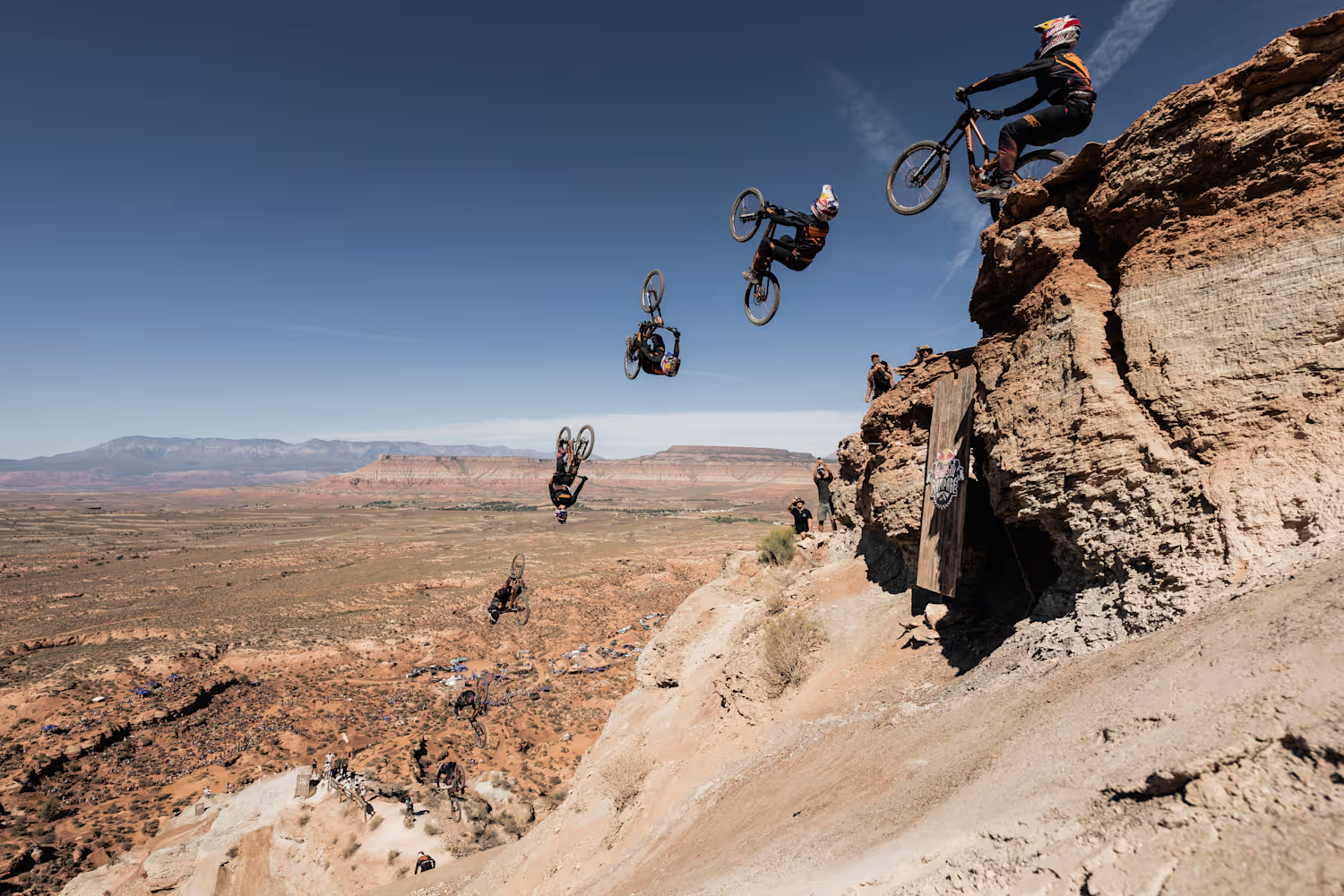
Red Bull Rampage – the legendary freeride mountain bike competition – is about to turn this raw cliff face into the stage for something spectacular. And as I watch the preparations unfold, I can’t help thinking: this might just be the perfect event.
It generates buzz and content all week long, tells a compelling story from multiple perspectives (the riders and the trail builders), and it started as a humble experiment that grew into a global phenomenon.
In short, Red Bull Rampage is a content machine – and a masterclass in event storytelling.
From Desert Dream to Global Spectacle
Every October, the world’s top freeride mountain bikers make a pilgrimage to Virgin, Utah for Red Bull Rampage. Today it’s a globally broadcast spectacle with helicopters, drones, and huge crowds, but it wasn’t always that way.
The very first Rampage in 2001 was a far cry from today’s high-profile production. Mountain Bike Action Magazine recalls that at Rampage #1, “there were only about 100 people there, if that, including the riders, their families… a few journalists… and a few spectators”.
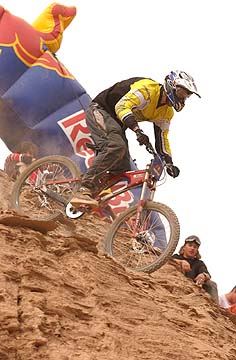
Back then, freeride mountain biking was new and unproven – virtually no one knew if an event on untouched Utah cliffs would even work. It was a grassroots affair, an oddball in a time dominated by traditional races.
Fast forward to the present, and Rampage has evolved into what some call the “Super Bowl of mountain biking.” The scale of the event today is exponentially bigger: live broadcasts worldwide, crowds perched on red-rock ridges, and a production on par with major sporting events. As one journalist noted, “Helicopter cameras, drones, huge crowds and all the infrastructure of a high-profile event,” now define Rampage, compared to “the more grassroots appearance of that first year”. In 2024, Rampage introduced a women’s competition for the first time, expanding the event’s reach and storytelling scope (and yes, it was epic).
What began as a niche experiment has grown into a historic event with over two decades of lore, proving that starting small and staying authentic can spark something that captures the world’s attention.
A Week of Untold Stories in the Making
One of the reasons Rampage is pure magic for content creation is that the main event is just the climax of a much longer story.
Long before finals day, the action has already begun on the mountain. Fans only get to see the final piece of the puzzle when the riders drop in on event day, but in the preceding days an army of riders and dig crews are hard at work, turning barren cliffs into rideable lines.
If you’re not familiar with Red Bull Rampage – each athlete is responsible for building their own route down the mountain from scratch. They arrive a week early with just two teammates (their “diggers”), armed with hand tools and boundless imagination. Power tools or outside materials are strictly forbidden – aside from a limited number of sandbags – so they sculpt the course entirely by hand, using the natural terrain as their canvas.
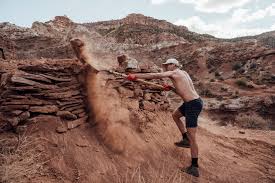
Think about that: an elite sporting event where competitors spend days literally building the venue. It’s a grueling, artful process. “Before a huge drop or a half-cab 540, riders and their crew spend countless hours crafting the hand-built lines that make Red Bull Rampage possible…building a line isn’t a process; it’s an art form,” as one report described.
In just a week’s time, these teams carve berms, sculpt jumps, and stabilize landings with shovels, pickaxes and sheer creativity, all under a punishing sun on loose desert rock. The result is that by the time the competition runs, every inch of the course has a story behind it – of sweat, problem-solving, and daredevil engineering. The riders become co-authors of the event, not just performers.
Media outlets and fans eagerly follow this build-up. Each day of “dig week” yields new mini-dramas and content: a massive drop taking shape here, a rushed repair after wind or rain there.
By competition day, even viewers at home feel personally invested in the lines and the riders who built them. Red Bull capitalizes on this by pushing out daily behind-the-scenes videos, course previews, rider interviews and social media posts throughout the week. In the run-up to the finals, you’ll see content rolling out across Red Bull TV, RedBull.com, YouTube, Instagram, TikTok… you name it. The effect is a sustained drumbeat of excitement – the event isn’t just one day, it’s a full week of engagement.
Rampage turns anticipation into its own spectacle.
Riders and Builders: Dual Narratives Drive the Drama
Another aspect Rampage has nailed is storytelling from multiple perspectives. Most sports events only spotlight the athletes on game day. Rampage shines a light not only on the riders dropping in, but also on those two unsung heroes standing just out of frame with dust-covered shovels. The dig teams are as much a part of the narrative as the competitors. These builders are often close friends or mentors to the riders, and their personal investment adds an emotional layer to every run. As Sports Illustrated put it, “jaw-dropping runs start with the dig crews” at Rampage[1]. Every big trick or cliff drop we scream about on finals day has the fingerprints of an unseen crew working tirelessly in the Utah sun.
This dual narrative – the rider and the builder – gives Rampage a storytelling depth rarely seen in sports. We witness the trust and tension in those partnerships: a rider pushing limits versus a friend who wants them to land safe. We see creative visions sketched in the dirt. We see failure, adjustment, and triumph long before the judges ever hold up scorecards.
It humanizes the event. Fans don’t just cheer for a name on a roster; they’re rooting for the success of a project that a trio of people poured their heart into all week. By finals, each run feels like the culmination of a hero’s journey for a small team.
The content practically writes itself – athlete profiles, dig crew interviews, time-lapse videos of lines taking shape, debates about strategy and risk.
As one article noted, “after a grueling workweek, the diggers step aside and allow the riders to shine…their work is the bedrock of Rampage’s legendary reputation”. In other words, the event’s mythos isn’t just about individual glory; it’s about collaboration and craft, which resonates with audiences on a deeper level.
The Power of Story in Any Event: Lessons from TransRockies
Red Bull Rampage may be unique in its format, but the power of storytelling in sports events is universal. Even in very different arenas, the content machine approach can transform an event from a one-off competition into a narrative that people follow with devotion.
A great example from the endurance racing world is the TransRockies series – a multi-day mountain bike stage race (and trail run) that has thrived by leveraging stories and community. TransRockies began in 2002 with a 7-day MTB race across the Canadian Rockies, at a time when hardly any stage races like it existed in North America[2]. It started humbly (much like Rampage) but grew into a celebrated annual adventure that now attracts riders from around the globe. What kept TransRockies going strong for 20+ years? In large part, emphasizing the stories.
As TransRockies co-founder Aaron McConnell reflected on their philosophy: “Every day that you step up to a start line you’re building a story – a story of victory, a story of defeat… stories of struggle, friendship, pain and pleasure”. A seven-day race naturally produces narrative arcs; every stage is a new chapter filled with challenges overcome and camaraderie forged around the campfire.
Over two decades, TransRockies had about 20,000 participants across 278 race days, generating roughly 80,000 individual “story-days” – each one an experience worth sharing. The organizers recognized this rich content early on. They cultivated it by daily race recaps, rider blogs, photos, and later video highlights for each stage, keeping fans and families engaged throughout the week-long journey.
Crucially, TransRockies also turned its participants into content creators. The result? An archive of human-interest tales – from amateurs conquering mountains to lifelong friendships formed in the wild, all associated with the event. Just like Rampage, TransRockies grew from a one-event idea into a brand built on narrative.
Both events prove that when you treat an event not merely as a competition but as a wellspring of stories, you create something that can captivate audiences year after year.
Making Your Event a Content Machine – How to Do It
What actionable lessons can race directors and event organizers draw from Rampage, TransRockies, and events like them? How can you turn your event into a content-generating, story-telling machine? Here are a few key strategies:
1.Start the Story Before the Start Line: Don’t wait until race day to engage your audience. Create build-up events or behind-the-scenes access in the days (or months) leading to the main event. Rampage’s dig week is a perfect model – fans were already glued to daily content before a single ride was scored.
In your event, this could mean course previews, athlete interviews, training diaries, or live Q&As that build anticipation. Generate content all week (or season) long so that by the time the start gun fires, the audience is already invested.
2. Highlight the Human Stories: Every event is fundamentally about people – their dreams, challenges, and teamwork. Shine a light on those human elements. Rampage does this by showcasing the bond between riders and diggers, giving viewers two angles on the action. TransRockies does it by celebrating each participant’s personal journey (e.g. profiling an amateur rider’s hardships on stage 3, or a volunteer crew’s dedication).
Identify the compelling characters in your event (athletes, crew, even fans) and tell their stories. When your audience cares about who is racing and why, not just the results, they’ll hang on every update.
3. Encourage Participant-Created Content: Your participants and teams are content creators too – empower them! Red Bull Rampage riders naturally generate amazing footage and posts as they practice insane stunts. You can facilitate this by giving participants a platform or prompt to share.
Invite attendees to post their perspective with a dedicated hashtag and reshare their best stories. This not only multiplies your content output, it builds community. An engaged community will produce authentic content that attracts others via word of mouth.
4.Leverage Multiple Media Channels: Be everywhere your audience is. Rampage’s organizer (Red Bull) blasts content on live TV, websites, YouTube, Instagram, TikTok, and more – each platform tailored to different content formats. You don’t need Red Bull’s budget to do this; even small events can mix mediums.
Post short videos or live streams on social media, write daily blog updates or emails, share photo galleries, and encourage discussion in forums or group chats. A multi-channel approach ensures your event’s narrative reaches the widest audience and keeps them hooked through varied content.
5.Embrace Authenticity and Build Tradition: One reason Red Bull Rampage or an event like TransRockies grew so much is that they started with authentic experiences. Rampage’s no-machinery, no-manicured-track ethos might seem crazy, but it created a culture and tradition that fans love. TransRockies’ commitment to tough, soulful adventure riding did the same.
Don’t be afraid to do something different or grassroots at first – focus on delivering an experience that is true to your sport’s spirit. Over time, those authentic touches become your event’s legend. As your event grows, keep those core elements alive. Traditions give content extra meaning because they remind everyone how far the event has come.
At the end of the day,
the brilliance of Red Bull Rampage is that it isn’t just a one-day contest to see who scores highest – it’s a narrative that unfolds over time, built by a cast of characters both on the bike and behind the scenes. It generates excitement not by press releases or hype alone, but by letting us witness a story of creativity, risk, and passion piece by piece. That is the hallmark of a perfect event in today’s content-driven world.
As organizers, if we treat our events as living stories – with protagonists, backstage drama, and evolving chapters – we transform them into experiences that fans don’t just watch, but feel a part of. Rampage has shown us the blueprint: make your event a content machine, and you’ll build not only an audience, but a legacy.
Sources: Red Bull Rampage official guide; Sports Illustrated (Brad Repka); Unofficial Networks; Canadian Cycling Magazine; Mountain Bike Action; TransRockies 20th Anniversary retrospect; Fernie TransRockies report.
[1] The Red Bull Rampage and the Dig Teams Shaping MTB’s Most Extreme Event
[2] transrockies – Fernie bike events
 blog.zone4