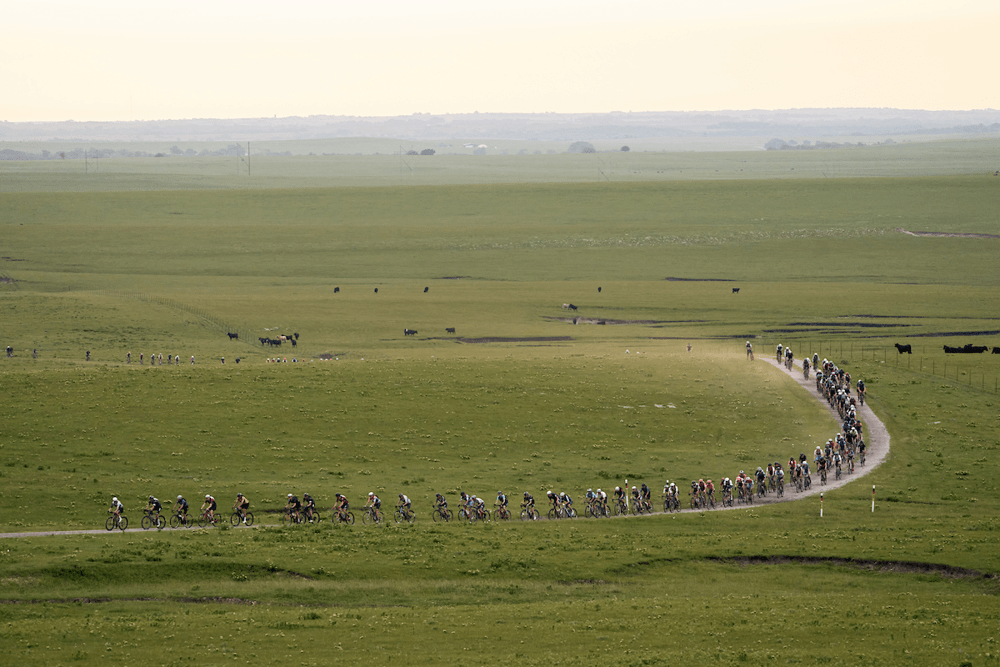
Gravel cycling has exploded from humble grassroots beginnings into a global phenomenon.
In the past decade, gravel racing – tackling miles of unpaved backroads on drop-bar bikes – has shifted from niche “gravel grinder” events to the mainstream. Participation is booming, with thousands of riders, lining up to test themselves on dust, dirt, and adventure. This surge has led some to argue that gravel is just getting started and may have far more growth potential than traditional road racing.
The appeal lies not only in the thrill of competition, but in the inclusive, community-driven spirit that gravel events foster – a spirit reminiscent of classic gran fondos, but with a fresh twist off the beaten path.
From Gravel Roots to a Global Movement
Gravel racing didn’t appear out of thin air. Early cycling itself was born on rough roads – think cobbles and mountain passes of old-school European races. The modern version took root in North America during the late ’90s and early 2000s. Rides like Ontario’s Paris-to-Ancaster and the Dirty Kanza (now Unbound Gravel) sparked a new subculture: small, homegrown events that prioritized finishing over podiums. Riders weren’t chasing prize money; they were chasing experience. A big day out, good stories, and a beer with friends at the finish line.
That grassroots culture spread like wildfire through the 2010s. The U.S., with its endless network of unpaved roads, became the perfect playground. Races like Unbound and Barry-Roubaix swelled from a few dozen participants to thousands. By the time the UCI stepped in with a global Gravel World Series in 2022, the movement had already gone global. What began as a community of dirt-loving outliers became cycling’s fastest-growing discipline.
The New Gran Fondo: Mass Participation and Community Spirit
One reason gravel riding is touted as the new gran fondo is its emphasis on mass participation and inclusivity. Like a classic Italian gran fondo or a city marathon, gravel events welcome riders of all levels. Everyone tackles the same course, creating a shared experience. This all-inclusiveness is a stark contrast to traditional road racing, which segregates fields by category, requires licenses, and often feels closed-off to newcomers.
Gravel greatly lowers the barriers to entry.
The spirit is welcoming: families can participate together, and first-timers line up next to seasoned racers. Many gravel rides even eschew strict rules – no official governing body, no mandatory club memberships – just pay the entry and pedal.
“There are very few barriers to entry for gravel; you need a bike and you go onto a website and sign up… For road, you have to figure out, what category am I? What licence do I need? …Because of that, gravel is simple. You sign up with your parents, your friends or your kids and you can all race together.” – Amy Charity, co-founder of the SBT GRVL race in Colorado
That welcoming vibe extends to the events themselves. Finish lines often resemble festivals – beer tents, food trucks, live music, high-fives all around – more party than podium ceremony. A shining example is Arizona’s Spirit World 100. Rather than a cutthroat race, the Spirit World is a three-day “gravel camp” in the tiny town of Patagonia, AZ, where participants ride through the high desert by day and enjoy group dinners, campfire hangouts, and even karaoke by night.
“ [The Race is] less about racing, and way more about camaraderie and sharing in each other’s journeys throughout the weekend.” – Zander and Heidi Ault, The Cyclists’ Menu and Spirit World Founders.
The event includes optional group rides, a big community dinner, and even a “backyard wedding feel” with its intimate size. Riders love the “amazing vibe” and “small community of friends” fee.
This ethos – gravel as a joyful shared adventure – is the collective experience, not just the surface or the speed, that defines gravel cycling.

Gravel vs. Road Racing: Why It’s a Better Ride for Many
Gravel’s rise comes at a time when road racing, especially in North America, has waned for amateur athletes. The comparative advantages of gravel are clear when you consider accessibility, safety, and organization:
- Easier and Safer to Organize: Road races often demand closed highways, police escorts, and costly permits – barriers that have shut down many local events. Gravel races avoid those headaches by using rural or low-traffic roads that don’t need full closures. Fewer logistics mean lower costs, less red tape, and more room for creativity. That flexibility lets organizers focus on rider experience instead of permits and policing.
- Open to Everyone: Gravel doesn’t care about categories or licenses. You don’t need to be part of a club or have years in the racing pipeline. Anyone can sign up, line up, and ride beside top pros. It’s a democratic format, more like a marathon than a traditional bike race, where finishing is as meaningful as winning.
- Adventure and Autonomy: Gravel taps into the modern craving for exploration and challenge. Riders trade smooth tarmac for dirt, mud, and self-reliance. You fix your own flats, navigate via GPS, and embrace unpredictable terrain. The appeal isn’t just physical, it’s mental. Gravel brings back that sense of adventure and discovery that road racing lost long ago.
- Community over Competition: The vibe is friendly, not cutthroat. “No jerks in gravel” might sound like a joke, but it captures the culture. Pros and amateurs share the same course and the same post-race beers. It’s more about shared experience than hierarchy, and that community spirit has become the foundation of the sport.
Marquee Gravel Races: Unbound, Spirit World, and More
Gravel’s boom is perhaps best illustrated by its headline events, which have become bucket-list challenges for riders and high-profile showcases for sponsors. Here are a few of the biggest and most influential gravel races:
- Unbound Gravel (Kansas, USA): The 200-mile behemoth that started it all. What began in 2006 with 34 riders now attracts thousands and has become the Super Bowl of gravel racing.
- SBT GRVL (Colorado, USA): A polished, pro-level event that still manages to keep its inclusive roots. It’s expanded globally with sister races like FNLD GRVL in Finland.
- Belgian Waffle Ride (USA): Equal parts sufferfest and party, this multi-state series combines road, dirt, and beer in a distinctly irreverent package.
- Gravel Worlds (Nebraska & UCI Series): From its pirate-themed, tongue-in-cheek beginnings to an official UCI world championship, this event symbolizes gravel’s evolution from rebellion to recognition.
- Spirit World 100 (Arizona, USA): More a community gathering than a race – think adult summer camp on bikes.
- The 2025 Trek BC Gravel Series (Vancouver Island, Canada) – not your average weekend ride – it’s a test of grit, lungs, and willpower set against the unexplored gravel backdrops of Vancouver Island.
Where It’s Headed Next
Gravel’s core values – community, adventure, and accessibility – have stayed intact even as the sport professionalizes. Top racers now build independent careers as “privateers,” mixing racing with brand partnerships and media projects. For many, gravel has become a legitimate career path outside traditional pro road racing.
And the momentum isn’t slowing. The UCI’s Gravel World Series now spans 20+ countries, and new races are popping up everywhere. Gravel’s blend of competition and camaraderie has made it one of the most relevant, sustainable formats in modern cycling.
Gravel’s growth is a response. A response to over-structured road racing, to the car-clogged roads, to the desire for freedom and fun. Whether you’re racing Unbound, cruising a local gravel fondo, or exploring forest roads on your own, you’re part of a movement redefining what cycling can be: gritty, social, and grounded in adventure.
Sources
- Cycling Weekly – The History of Gravel Racing
- BikeRadar – Is Gravel Racing Saving the U.S. Cycling Scene?
- VeloNews – The Spirit of Gravel, Revisited
- Spirit World 100 (Official Site)
- UCI – Back to the Roots of Gravel Riding and Racing
- Escape Collective – Why Pro Gravel Racing May Be the Future of Bike Racing
- Medium (Peter Abraham) – The State of Gravel Cycling
 blog.zone4